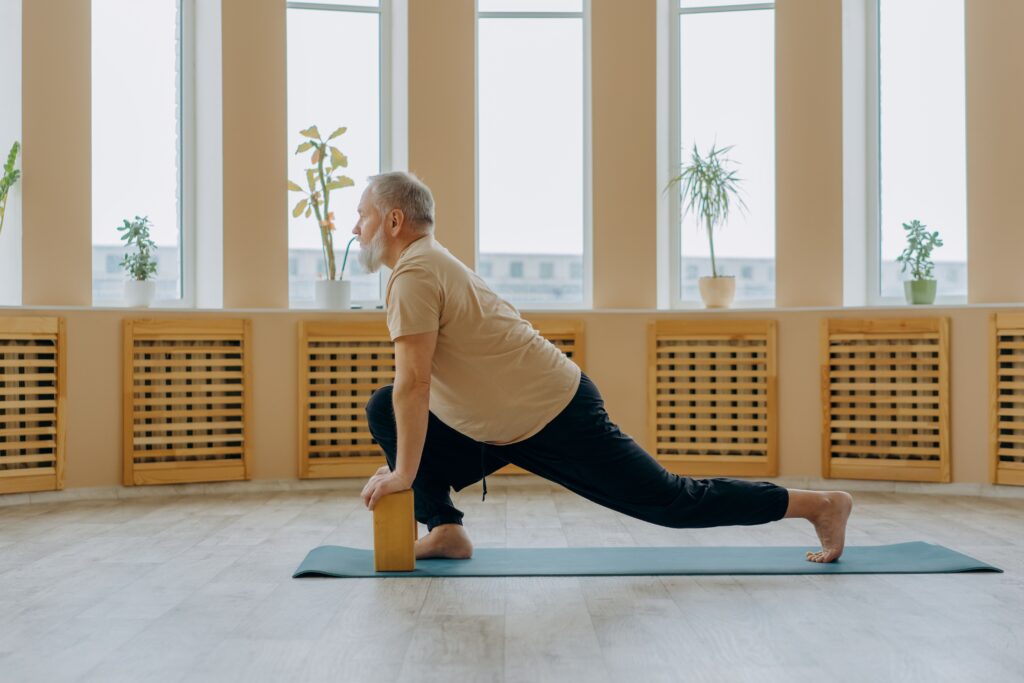
If you’ve ever stopped doing a pose because you simply couldn’t reach the floor comfortably, a yoga block isn’t cheating — it’s the tool that lets you do the pose correctly instead of straining into a bad version of it.
Where a block actually helps
- Triangle Pose — place the block under your lower hand so your torso can stay long instead of collapsing toward the floor.
- Half Moon Pose — a block under the bottom hand gives you a stable base while you build the balance and hip-opening strength the pose needs.
- Seated Forward Fold — sitting on the edge of a block tilts your pelvis forward, making the stretch reach your hamstrings instead of just rounding your back.
- Bridge Pose — a block under your sacrum turns the pose into a supported, restorative hold instead of an active strength move.
- Supported Fish Pose — a block under the shoulder blades opens the chest gently, useful after a day spent hunched over a laptop.
It’s a beginner tool and a longevity tool
Blocks get marketed mostly at beginners, but plenty of experienced yoga practitioners keep using them for the poses their particular body just doesn’t reach comfortably — flexibility varies a lot person to person and a block is a permanent way to adjust the pose to you, not a training-wheels phase you graduate out of.
Three of those five poses — Seated Forward Fold, Bridge and Supported Fish — put your weight on the floor rather than on your feet, and on wood, tile or concrete that is where a thin mat is felt. A thicker foam mat is the usual answer; the Gaiam thick mat is listed at 10 mm of high-density foam. The trade-off runs the other way for Half Moon: the softer the surface, the less stable a standing balance pose feels, so a thinner mat is the better tool for those.
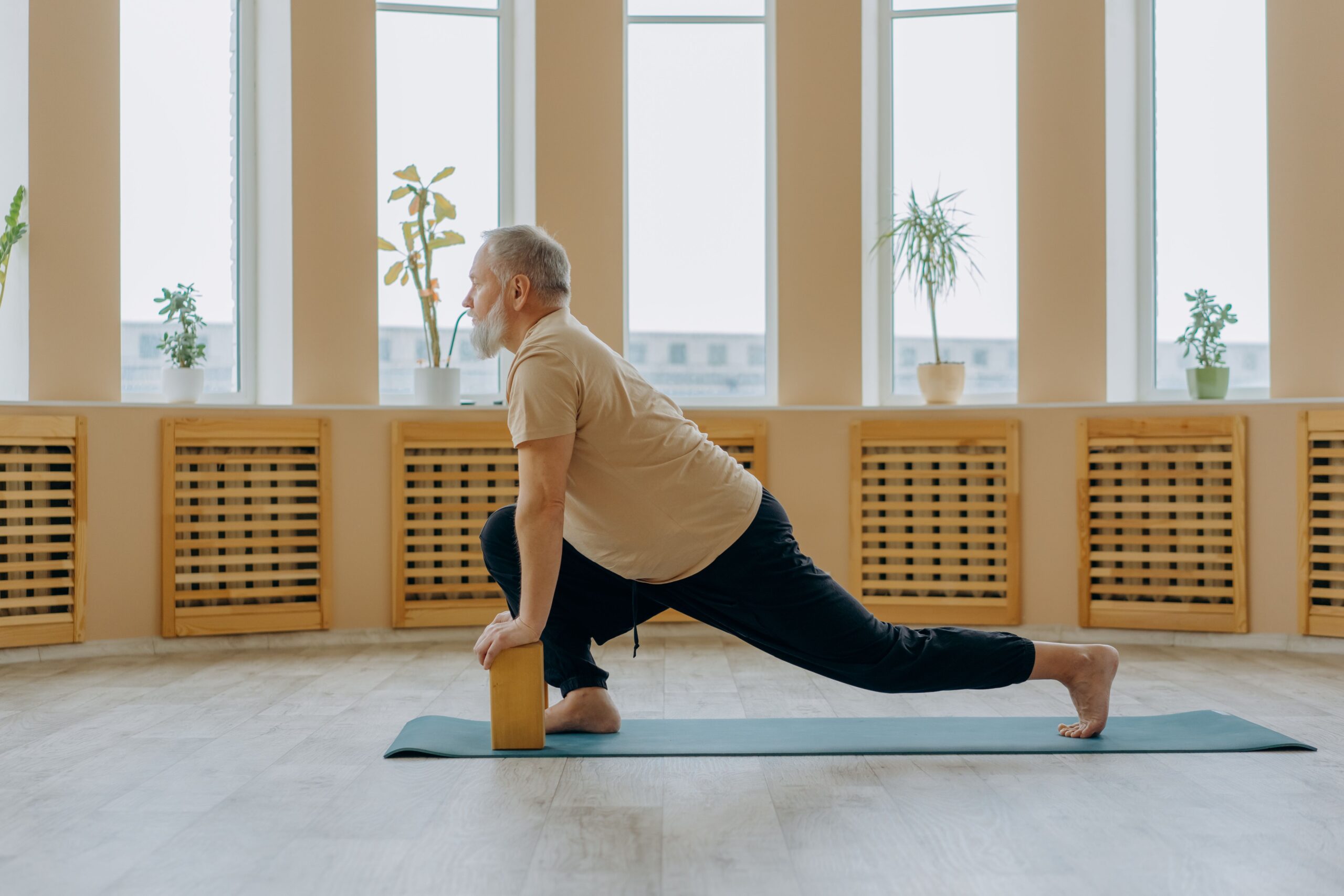
Firm EVA foam blocks that hold your weight without compressing — a genuinely useful pair, not just a beginner crutch.
See Full Review →As an Amazon Associate I earn from qualifying purchases. This is a researched recommendation, not a claim of personal testing, and none of this is medical advice.