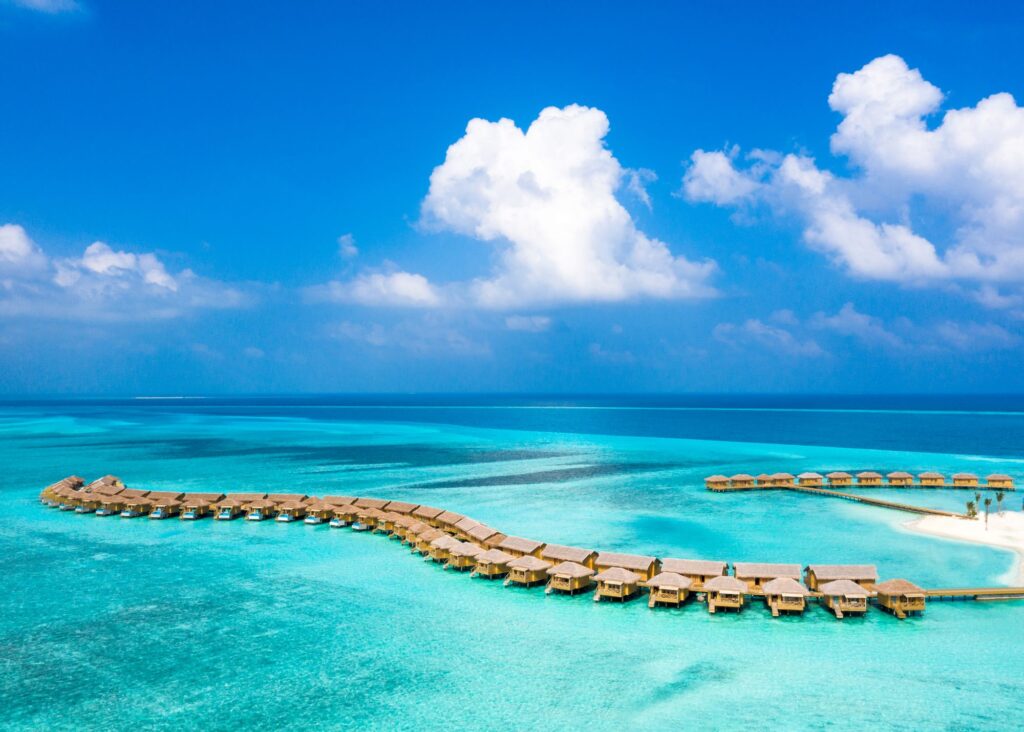
The Maldives gets marketed almost entirely on the overwater-bungalow photo, but the wellness case for it is different: this is one of the easiest places in the world to swim, snorkel, and paddle every single day, because the water is warm, shallow near the reef edge, and calm inside the atoll lagoons. The tradeoff is the getting-there — most trips involve a long-haul flight followed by a domestic transfer or speedboat, which is exactly the kind of travel day that leaves legs swollen and stiff before the holiday has even started.
Reef swimming and paddleboarding, without a lot of gear
Because so many resorts sit directly on a house reef, snorkeling here often means walking off the beach rather than taking a boat out — a genuinely rare setup. Stand-up paddleboarding is the other low-effort, high-payoff option: the lagoons are typically flat and wind-sheltered in the morning, which makes it approachable even for a first-timer, and it works the core and shoulders in a way that does not feel like a workout.
If your resort house reef is limited, a boat trip to a proper reef is the upgrade. This snorkeling trip with nurse sharks, a coral reef and a sandbank from Malé takes about three hours; check the listing’s pickup area against where you are staying.
The part nobody plans for: the travel day itself
A flight of 9+ hours followed by a transfer easily adds up to 15-20 hours of sitting, which is a well-documented driver of leg swelling and clot risk on long-haul routes. Graduated compression socks are the simplest countermeasure – cheap, packable, and just as useful on the flight home after a week of swimming and paddling.
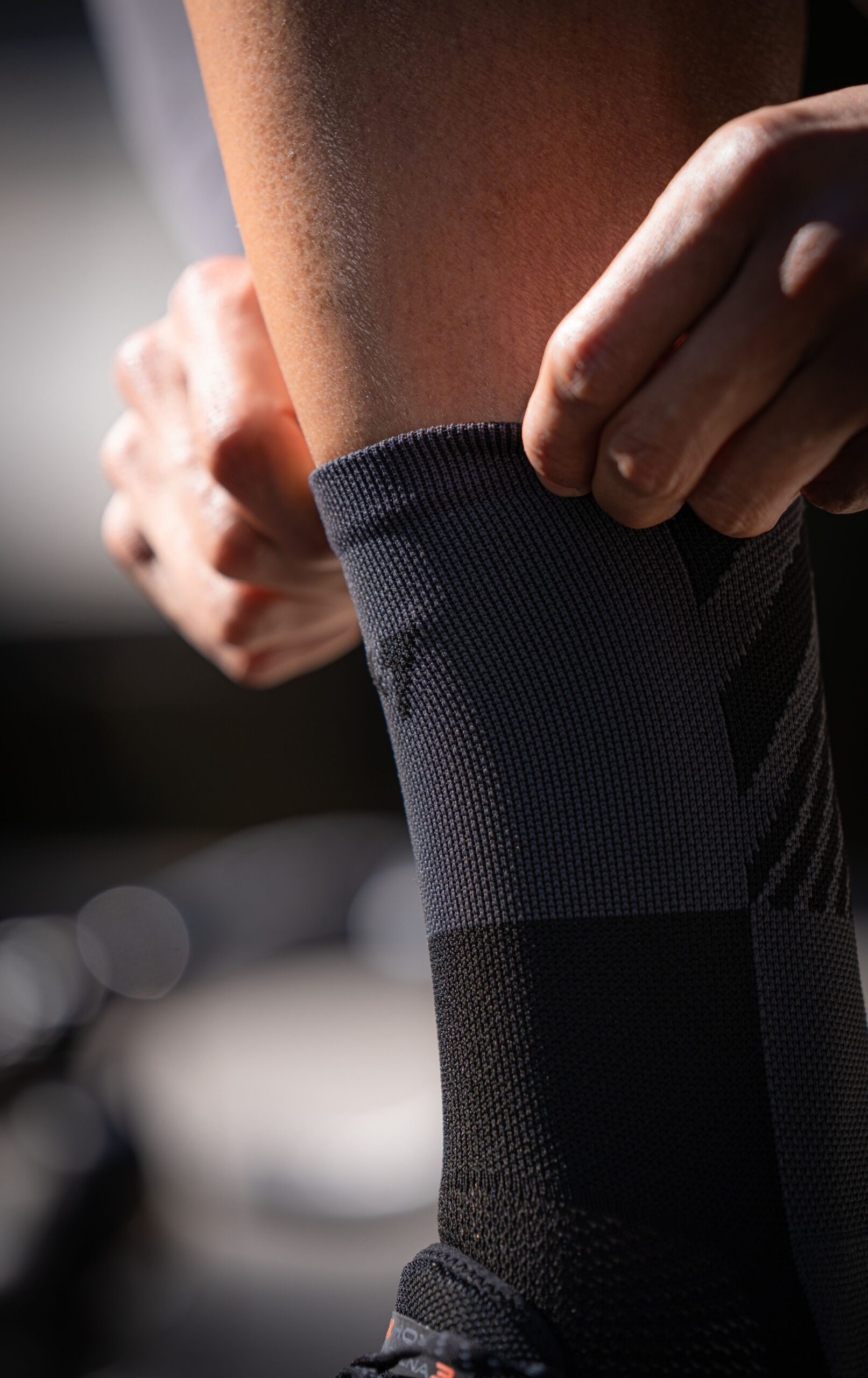
Graduated compression socks built for long-haul flights and long days on your feet – pack flat and work for the trip both ways.
See Full Review →Practical notes
- Dry season runs roughly December to April with calmer seas; the May to November monsoon season brings more wind and swell, which affects snorkeling visibility more than swimming itself.
- Not every resort island has a swimmable house reef right off the beach – worth checking specifically before booking if reef access is the main draw.
- Reef-safe sunscreen is often required or strongly encouraged by resorts to protect the coral guests are there to see.
Where to stay
In the Maldives the island is the decision: if reef swimming is the reason you go, filter for resorts that say they have a house reef, and check how you get there (speedboat or seaplane) before you book. We have not stayed at any of them; compare what is available for your dates: resorts and guesthouses in the Maldives on Booking.com (affiliate link).
Know before you go
Checked against official sources in October 2026. Rules and fees change, so confirm with the source before you travel.
- Traveller declaration: Complete the IMUGA traveller declaration within 96 hours before your flight lands. Tourists get a 30-day visa on arrival. (UK FCDO travel advice)
- What not to pack: It is illegal to bring alcohol, pork or pork products into the Maldives. (UK FCDO travel advice)
- Local islands: Bikinis and swimsuits are fine at resorts. On local islands they are not acceptable unless the island has a designated bikini beach. Alcohol and pork are served at resorts and on liveaboards but are prohibited on local islands. (Visit Maldives)
- Green tax: Since 1 January 2025, guests pay USD 12 per night at tourist resorts and USD 6 per night at hotels on inhabited islands with 50 or fewer rooms. Children under two are exempt. (Maldives Inland Revenue Authority)
- Currents: Strong tidal currents can pull swimmers away from the shore, and people have drowned. Swim only in supervised or designated areas and follow warning flags. (UK FCDO travel advice)
- Boats and diving: There have been fatal boat-propeller accidents in the South Ari Marine Protected Area and at nearby whale shark sites, so take extra care when snorkelling near boats. Many resort islands are more than an hour from the nearest hyperbaric chamber. (UK FCDO travel advice)
- Dengue: The UK’s travel health service lists a dengue risk in the Maldives and reports higher case numbers in 2026 than in the same period of earlier years. Avoid mosquito bites, especially during the day. (TravelHealthPro (NaTHNaC))
Pack for it
The gear that earns its space on this particular trip. Each review states what the item does well and one honest downside, with current pricing on Amazon.
- MZOO 3D sleep mask – The travel day is the hard part – a proper blackout mask is what makes the long-haul leg sleepable.
- Loop Quiet 2 ear plugs – Cabin noise and a seatmate you did not choose; 24 dB of quiet in a pocket-sized case.
- Rainleaf microfiber travel towel – Reef swims and boat transfers mean a wet towel several times a day.
As an Amazon Associate I earn from qualifying purchases. This is a researched recommendation, not a claim of personal testing, and none of this is medical advice.
Some links on this page are affiliate links: product links go to our own review pages, and tour links go to Viator or GetYourGuide, and hotel links go to Booking.com (via CJ). If you book or buy through them we may earn a commission, at no extra cost to you. We have not taken these tours ourselves; we picked them because they match the activity described.