

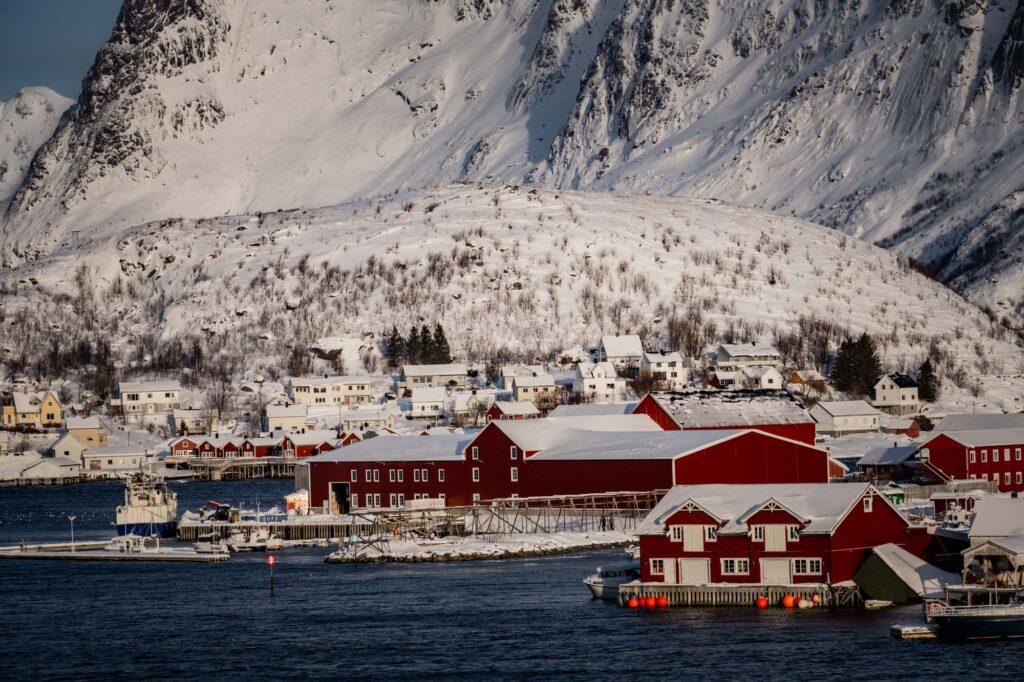
The Lofoten Islands in northern Norway are one of the more physically demanding wellness destinations on this list – steep coastal peaks rise almost directly out of the sea, which means the hikes here are short in distance but genuinely steep, and winter visits trade summer’s midnight sun for a real shot at the northern lights instead.
Steep peaks and a deep sauna culture
Reinebringen, above the village of Reine, is the archetypal Lofoten hike – a stone staircase with 484 m of climbing, 5.8 km round trip from Ytre Havn parking, rewarding a short but genuinely tough ascent with one of the most photographed viewpoints in Norway. Winter brings shorter days and colder trails, but also easier access to the aurora, and coastal saunas (an increasingly common fixture in Norwegian fishing villages) followed by a cold dip in the fjord are treated as a normal part of the routine, not a spa add-on.
Winter trails in Lofoten change fast with snow and daylight. If you would rather not navigate them alone, a guided winter hike on snowshoes in West Lofoten takes about three hours; check the listing for what is included.
Why recovery matters more in a cold climate
Steep stone-step trails and cold-water immersion both leave muscles tighter than a flat walk ever would, and cold weather itself slows blood flow to the extremities, making stiffness linger longer than it would on a warm-weather trip. A percussion massage gun applied to the calves and shoulders after a day like this is a quick way to work through that stiffness.
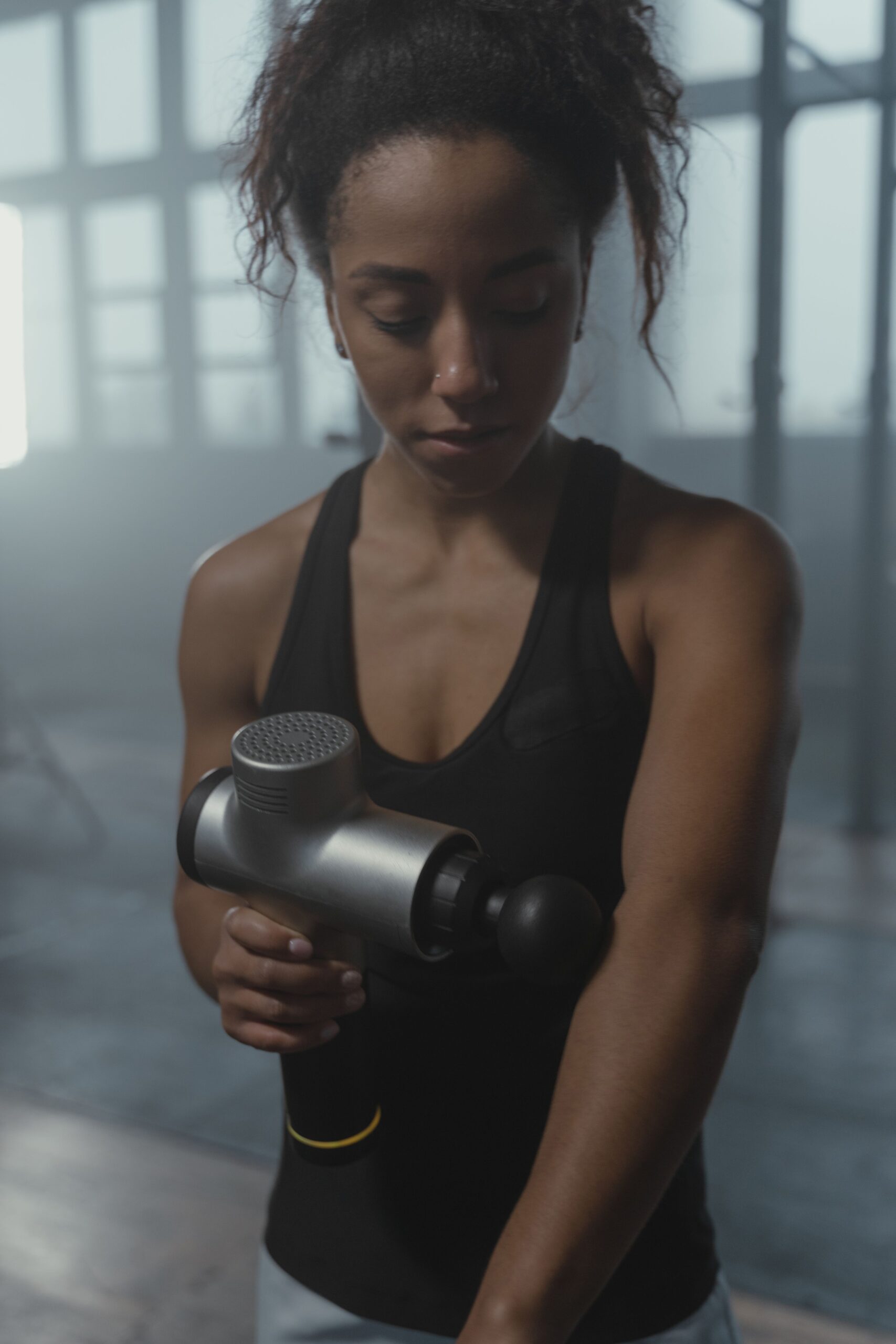
A budget-friendly percussion massage gun with 10 interchangeable heads, useful for working out post-hike calf and shoulder tightness.
See Full Review →Practical notes
- Northern lights viewing is best roughly September through March, while midnight sun runs late May through July – the two experiences do not overlap.
- Reinebringen.no says the hike is not suitable for winter conditions, with avalanche risk and ice on the steps even early in autumn.
- Coastal sauna and cold-dip setups are usually found near fishing villages such as Reine and Nusfjord, often run as small independent businesses rather than hotel amenities.
Norwegian sauna culture is informal in a way that central European thermal baths are not. If you are combining this with a stop in Germany or Austria, the written requirements there — towel size, when you must cover up, the phone ban — are set out in German sauna rules.
Where to stay
Distances in Lofoten are longer than the map suggests, so stay near what you plan to do: Reine and the southern villages for the steep hikes and coastal saunas, Svolvær for the most transport links. We have not stayed at a specific place there; compare options for your dates: stays around Reine on Booking.com or in Svolvær (affiliate links).
Know before you go
Checked against official sources in October 2026. Rules and fees change, so confirm with the source before you travel.
- Reinebringen in winter: The trail’s managers say Reinebringen is not suitable for winter conditions: there is avalanche risk along the route, and ice can form on the steps even early in autumn. The round trip from Ytre Havn parking is 5.8 km with 484 m of climbing. (Reinebringen.no)
- The mountain code: Norway’s mountain code starts with planning your trip and telling someone where you are going and when you expect to return, whether or not you will have mobile coverage. (DNT)
- Avalanche forecasts: Check the regional avalanche and weather warnings at Varsom.no before any winter hike. Avalanches can release on slopes higher than 5 metres and steeper than 30 degrees, and can run three times the height of the slope. (DNT, Varsom)
- Winter kit: For winter trips the mountain code advises carrying a wind shelter, sleeping mat, sleeping bag and shovel, so you can survive an unplanned night outdoors. (DNT)
- Emergency numbers: Fire 110, police 112, ambulance 113, emergencies at sea 120. The Joint Rescue Coordination Centre for Northern Norway is +47 75 55 90 00. (Visit Norway)
- Camping: Under the right to roam you may camp at least 150 metres from the nearest inhabited house or cabin. Lofoten has its own local camping rules, and Visit Norway recommends designated campsites there. (Visit Norway)
- Winter roads: October to April is the cold season for driving. Statens vegvesen, the Norwegian Public Roads Administration, publishes live road, tunnel and ferry information. (Visit Norway)
Pack for it
The gear that earns its space on this particular trip. Each review states what the item does well and one honest downside, with current pricing on Amazon.
- Rainleaf microfiber travel towel – Sauna, cold plunge, repeat – the one item that decides whether that cycle is pleasant.
- Liquid I.V. Hydration Multiplier – Sauna rounds pull out fluid and salts; cold weather hides how much.
- MZOO 3D sleep mask – Midnight sun in a Lofoten summer makes 1 AM look like afternoon.
As an Amazon Associate I earn from qualifying purchases. This is a researched recommendation, not a claim of personal testing, and none of this is medical advice.
Some links on this page are affiliate links: product links go to our own review pages, and tour links go to Viator or GetYourGuide, and hotel links go to Booking.com (via CJ). If you book or buy through them we may earn a commission, at no extra cost to you. We have not taken these tours ourselves; we picked them because they match the activity described.
Pingback: German Sauna Rules: What the House Rules Actually Require
Pingback: First German Therme Visit: What Happens, Step by Step
Pingback: What to Bring to a German Sauna or Therme (Checklist)