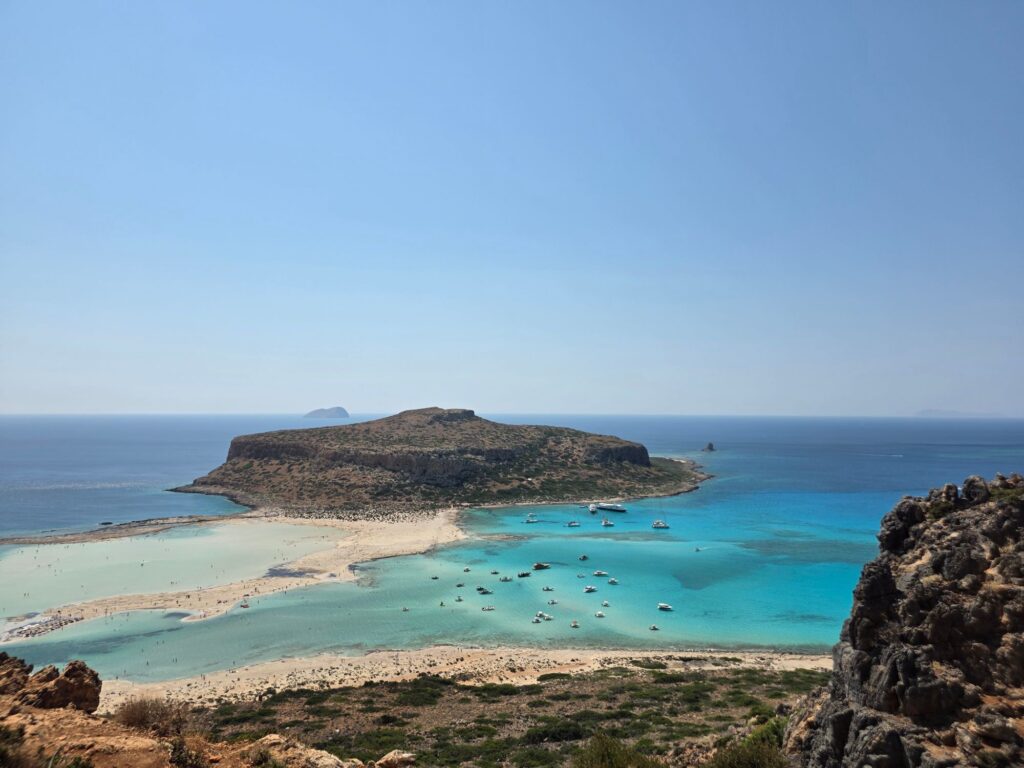
Crete is the largest of the Greek islands and, unlike the smaller Cyclades, has real mountains running through its interior – which is why it is home to one of the most-hiked gorges in Europe alongside the same warm, swimmable coastline the rest of Greece is known for. It is one of the few Mediterranean islands where a genuine full-day trek and an afternoon swim are both realistically on the table.
The Samaria Gorge, and swimming after
The Samaria Gorge trail runs roughly 16km from the Omalos plateau down to the coastal village of Agia Roumeli, dropping over 1,200 meters in elevation along the way – a serious day hike that takes most people 5 to 7 hours, ending at a beach where a swim is the standard reward. Outside the gorge, the south coast around Sfakia and Loutro offers shorter coastal walking paths with the same turquoise-water payoff at a fraction of the effort.
The Samaria Gorge is a one-way walk, which makes the logistics (early bus up, boat and bus back) the hard part. A full-day guided Samaria Gorge tour from the Chania area takes care of the route; check the listing for transport and for the current season dates, as the gorge is only open for part of the year.
Recovering from a 16km descent
A long downhill hike like Samaria loads the quads and calves far more than an equivalent flat walk, and that soreness tends to show up the next day rather than immediately – which is exactly when a foam roller earns its space in a carry-on. Rolling out the legs the evening of the hike measurably shortens how long that stiffness sticks around.
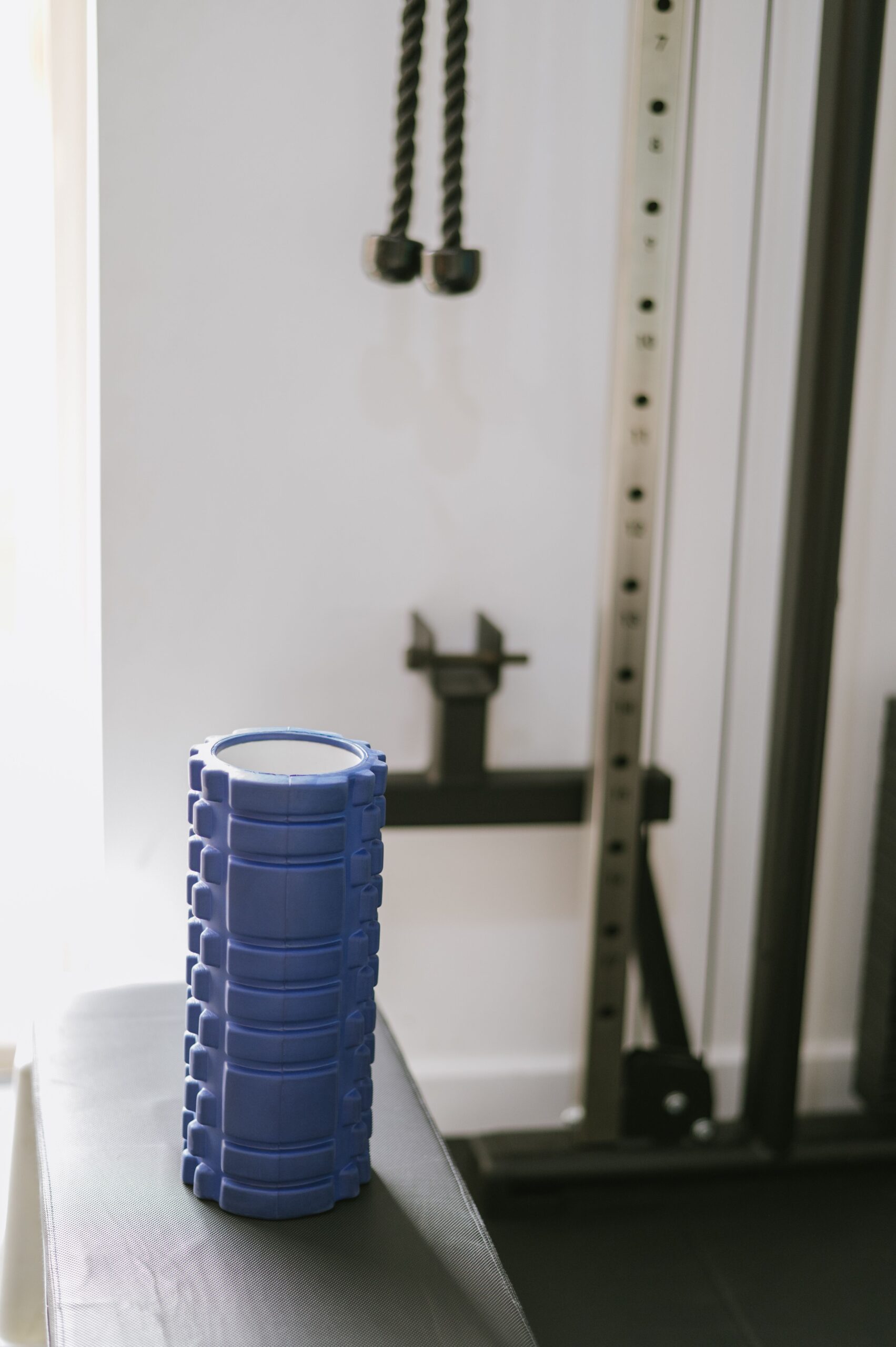
A firm, compact roller for post-hike leg recovery – light enough to pack and sturdy enough to hold up to daily use.
See Full Review →Practical notes
- The Samaria Gorge trail is typically only open May through October – it closes outside that window due to flood risk and winter conditions.
- A boat from Agia Roumeli to Hora Sfakion, Loutro or Paleochora is required to complete the trip, since the gorge only runs one direction.
- Sturdy hiking shoes matter more than usual here – the lower half of the gorge is loose rock and river-worn stone, not packed dirt.
Where to stay
Samaria Gorge day trips start early and most pick up in the Chania area, which makes Chania the easy base for this walk. We have not stayed at a specific hotel there; compare what is available for your dates: places to stay in Chania on Booking.com (affiliate link).
Know before you go
Checked against official sources in October 2026. Rules and fees change, so confirm with the source before you travel.
- Samaria ticket: You need a ticket to enter Samaria National Park. An individual ticket costs €10 and is issued online by NECCA, the Greek agency that manages the park. (NECCA Samaria tickets)
- Season: The gorge is open to visitors from 1 May to the end of October, depending on the weather. (Visit Greece)
- Weather closures: NECCA closes the gorge at both entrances when there are severe weather warnings, and announces the reopening on its ticket site. Check it on the morning you go. (NECCA Samaria tickets)
- Distance: The trail starts at 1,200 m on the Omalos plateau. The gorge itself is 12.5 km long, and the full route to the beach at Agia Roumeli is 16 km. (Visit Greece)
- Food, water and closing time: There are no shops inside the park, so bring light food. You can refill water at natural springs along the way. Overnight stays are not allowed, and everyone must be out by 7 p.m. (Visit Greece)
- Getting back: From Agia Roumeli you return by boat to Hora Sfakion, Loutro or Paleochora. If you drive to the start at Xyloskalo, you cannot collect the car at the exit. (Visit Greece)
- Heat, fire and rescue: Greek trails often have little shade, so avoid the peak sun hours. Lighting fires is illegal. Make sure your insurance covers mountain rescue and helicopter evacuation. The emergency number is 112. (UK FCDO)
Pack for it
The gear that earns its space on this particular trip. Each review states what the item does well and one honest downside, with current pricing on Amazon.
- Liquid I.V. Hydration Multiplier – A 16 km descent in Cretan heat is the clearest case on this whole site for electrolytes over plain water.
- LifeStraw Go filter bottle – Refill along the gorge route instead of carrying the full day of water from the top.
- Rainleaf microfiber travel towel – For the swim at Agia Roumeli at the bottom, and dry again before the ferry.
As an Amazon Associate I earn from qualifying purchases. This is a researched recommendation, not a claim of personal testing, and none of this is medical advice.
Some links on this page are affiliate links: product links go to our own review pages, and tour links go to Viator or GetYourGuide, and hotel links go to Booking.com (via CJ). If you book or buy through them we may earn a commission, at no extra cost to you. We have not taken these tours ourselves; we picked them because they match the activity described.