
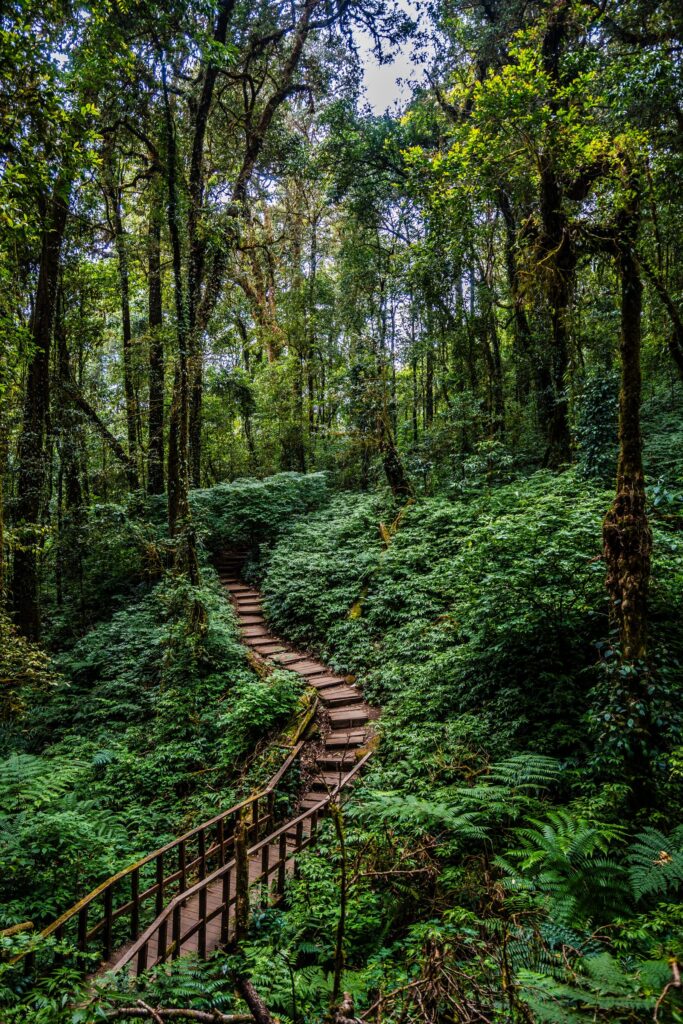
Chiang Mai province features multiple geothermal hot springs and national park nature trails accessible from the city for outdoor recreation and thermal bathing.
Chiang Mai’s hot springs and trails at a glance
Situated in northern Thailand surrounded by mountains, Chiang Mai province contains several public geothermal sites where naturally heated mineral water emerges from underground granite formations. These locations vary from fully developed public parks near the city center to remote thermal fields inside national parks. The historical center of Chiang Mai is enclosed by a city moat measuring about 6.5 km in circumference. Founded in 1296 CE, Chiang Mai was at one time the capital of the ancient Lanna kingdom. Today, visitors traveling outside the central city can access hot springs and surrounding nature trails in districts including San Kamphaeng, Mae On, Doi Saket, Samoeng, Chiang Dao, and Fang. These public sites feature foot-soaking streams, private soaking rooms, communal mineral pools, natural geysers, and egg-boiling pools.
Comparison of Chiang Mai Hot Springs
Geothermal locations across Chiang Mai province differ in distance, available facilities, entry costs, and transit requirements. San Kamphaeng Hot Springs, situated in Mae On District 36 km east of Chiang Mai city, features twin geysers that shoot steam and water up to 20 metres high. Water at the San Kamphaeng source reaches 105°C before flowing into designated cooling canals maintained at 40-45°C. Doi Saket Hot Springs, located 30-35 km northeast of the city in the Pa Miang area along Route 118, offers a community-run environment set among rice paddies. Pong Kwao Hot Springs, positioned 50 km northwest in Samoeng District along the Samoeng Loop (Route 1269 and Route 1096), provides a Japanese onsen-style layout with wooden decks, bamboo fencing, gender-segregated indoor pools, and outdoor private cabins with forest views.
Located further north in Fang District, Fang Hot Springs inside Doi Pha Hom Pok National Park spans 10 rai and contains over 50 individual spring outlets. Positioned in Pong Nam Ron village, this site features a geothermal geyser shooting up to 30 meters high. The source water ranges from 80-100°C, with thermal pool waters measuring between 50°C and 87°C. Additional public geothermal sites in the region include Pong Dueat, Theppanom, Chiang Dao, and Pong Arng.
| Hot Spring Name | Distance from Chiang Mai | Foreigner Entry Fee | Public Transport Options | Transport Difficulty |
|---|---|---|---|---|
| San Kamphaeng | 36 km | 100 baht | Yellow songthaew from Warorot Market | Easy |
| Doi Saket (Ban Pong) | 35 km | Free entry (grounds) | Songthaew plus chartered motorbike taxi | Moderate |
| Pong Kwao | 50 km | 150 to 200 baht | None | Moderate |
| Fang | 150 km | 200 baht | Bus or minivan to Fang town plus taxi charter | Challenging |
| Pong Dueat | 70 km | 300 baht (park fee) | Difficult | Moderate |
| Theppanom | 100 km | 300 baht (park fee) | None | Challenging |
| Chiang Dao | 75 km | Free | Fair (drop-off only) | Easy |
| Pong Arng | 115 km | 100 baht | None | Challenging |
Admission Prices and Service Fees
Admission charges and facility pricing vary depending on whether a site is community-managed, privately styled, or located inside a national park. San Kamphaeng Hot Springs charges foreign adults an entrance fee of 100 baht. Access to public foot-soaking streams is included with admission, while entry to the mineral swimming pool costs an extra 50 baht. Private bathing rooms at San Kamphaeng cost 65 baht, and Thai massage services are available on site.
Doi Saket Hot Springs provides free entry to its general grounds and foot-soaking streams. Visitors using private bathing rooms pay standard room fees of 100 baht or VIP room fees ranging from 200 to 300 baht. Shared pools and local massage services are also available on site.
Pong Kwao Hot Springs charges foreign visitors an admission fee of 150 to 200 baht, covering access to gender-segregated indoor pools and private outdoor cabins. An organic food restaurant operates on site.
At Fang Hot Springs inside Doi Pha Hom Pok National Park, admission fees for foreign visitors are 200 THB for adults and 100 THB for children. Admission for Thai nationals is 20 THB for adults and 10 THB for children. Other national park springs, including Pong Dueat and Theppanom, require a 300 baht park fee. Chiang Dao hot springs are free of charge to the public, whereas Pong Arng requires a 100 baht entry fee.
Operating Hours and Schedules
Operating schedules depend on individual site management. Fang Hot Springs opens daily from 07.30 to 19.00. Morning visits offer cooler temperatures and viewable rising steam before peak visitor crowds arrive. Drive times from central Chiang Mai vary by location: San Kamphaeng requires a 1-hour drive via Route 1317; Pong Kwao requires a 1.5 to 2-hour drive along the Samoeng Loop; and Fang Hot Springs requires a 2.5 to 3-hour drive via Route 107.
Site Regulations, Infrastructure, and Accessibility
Each hot spring location maintains specific rules and visitor infrastructure. At Pong Kwao Hot Springs, shared indoor thermal pools enforce gender segregation, while private outdoor cabins allow individual or private use. Fang Hot Springs offers facilities including a visitor center, local guides, clear directional signage, basic camping grounds, homestay and farm stay accommodations, and onsite restaurants. Fang Hot Springs also features pet-friendly spaces designated for visitors traveling with dogs and cats, a VAT refund center, and accessibility services for travelers with disabilities. However, specific sections of Fang Hot Springs are noted as not accessible for wheelchair users.
In San Kamphaeng district, which covers an area of 197.833 km2, visitors can combine hot spring visits with exploring nearby Muang On Caves. The cave location contains Buddhist shrines and features a group of wild monkeys near the entrance area.
Transportation Options and Driving Routes
Reaching Chiang Mai hot springs requires selecting appropriate transport based on route difficulty and distance:
San Kamphaeng Hot Springs is located 36 km east of central Chiang Mai. Drivers follow Route 1317 for approximately 1 hour. Alternatively, yellow songthaews depart from Warorot Market, costing 50 baht per passenger with a transit time of 90 minutes.
Doi Saket Hot Springs sits 30 to 35 km northeast via Route 118. Passengers can take a songthaew to Doi Saket town and charter a motorbike taxi for an additional 100 to 200 baht, though self-driving is recommended.
Pong Kwao Hot Springs lies 50 km northwest in Samoeng District. Located along the Samoeng Loop (Route 1269 and Route 1096), there is no public transport available. Traveling by rental car or vehicle takes between 1.5 and 2 hours on mountain roads.
Fang Hot Springs is situated 150 km north of central Chiang Mai. Drivers take Route 107 north for 2.5 to 3 hours. Public transit users can take a bus or minivan from Chiang Mai Arcade Bus Terminal to Fang town, then hire a local songthaew or taxi to Pong Nam Ron village. Private car rentals with drivers can also be arranged.
Optimal Season and Time to Visit
The recommended period for visiting Chiang Mai thermal springs and natural park paths is the cool season from November to February. Crisp weather during these months provides comfortable conditions for soaking in natural hot streams and walking forest trails. Visiting during early morning hours allows travelers to observe rising mist across thermal pools and experience fewer crowds at popular sites like San Kamphaeng and Fang.
Essential Gear and Items to Bring
Visitors planning a trip to Chiang Mai hot springs should prepare the following practical items:
Swimwear for use in foot canals, public pools, or private bathing rooms.
Personal towels for drying off after thermal baths.
Fresh eggs for boiling in designated high-temperature pools at San Kamphaeng or Fang (where source waters reach 80°C to 105°C), or cash to purchase eggs onsite.
Walking shoes for navigating nature trails within Doi Pha Hom Pok National Park and surrounding mountain areas.
Common Mistakes to Avoid
Expecting public transport to every spring: Remote locations such as Pong Kwao, Theppanom, and Pong Arng have no public transport services, requiring rental vehicles or private drivers.
Failing to carry cash for additional facility fees: Entry tickets to San Kamphaeng or Doi Saket cover admission or open streams only; private bathhouses (65 to 300 baht) and swimming pools (50 baht) require extra cash payments.
Misjudging travel duration: Reaching Fang Hot Springs requires driving 150 km each way, taking 2.5 to 3 hours from central Chiang Mai, making it best suited for a full day trip or overnight stay.
Overlooking accessibility constraints: Travelers with mobility restrictions should note that parts of Fang Hot Springs are not accessible for wheelchair users.
Where to stay and what to book
We have not stayed at a specific hotel and do not recommend one; compare what is available for your dates: places to stay near Chiang Mai on Booking.com. For guided days and tickets, see Chiang Mai tours on Viator. We have not taken these tours ourselves. These are affiliate links: if you book through them we may earn a commission, at no extra cost to you.
More hot springs to plan
Staying longer in the region? The Krabi active wellness guide swaps mountains for limestone coast and its own hot springs, and the Bali guide covers volcano hikes and hot water pools. For Japan’s take on hot springs, see Beppu onsen and the hells.
Sources
- Thaiger Chiang Mai Hot Springs Guide
- My Chiang Mai Tour – Fang Hot Spring Guide
- Wikivoyage Chiang Mai Guide
Last checked 2026-11-15. Compiled from the venue and tourism-board pages listed above; not visited in person. Prices and hours change, so confirm before you go.
Affiliate disclosure: some links on HealthMotiveHub earn a commission at no extra cost to you. See our disclosure.
Photo: forest trail in Doi Inthanon National Park, Chiang Mai province. Via Pexels (Pexels license).