
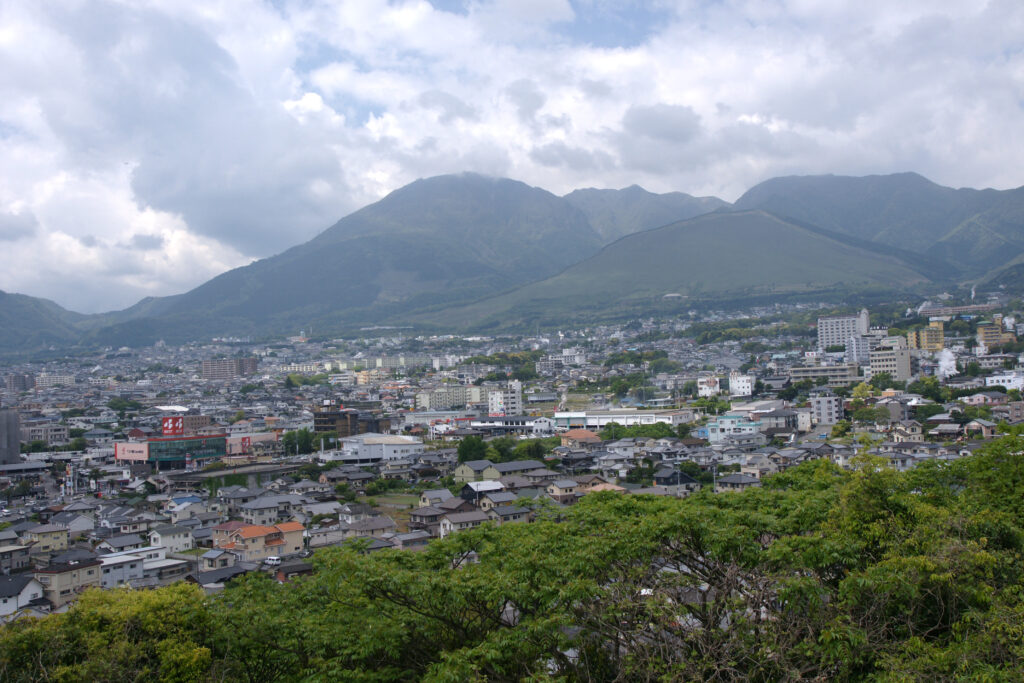
Beppu Onsen offers visitors a combination of seven geothermal viewing pits known as the Hells of Beppu alongside traditional hot spring bathhouses fed by daily volcanic water discharges.
Beppu’s hells and onsen at a glance
Beppu Onsen is an extensive hot spring system located in Oita Prefecture on the island of Kyushu, Japan. The city contains 2,909 hot spring vents that discharge more than 130,000 tons of hot spring water per day, representing the largest discharge volume in Japan. Geothermal water across the city reaches bathing temperatures between 40°C – 44°C, while thermal vents emerge at temperatures ranging from 50 to 99.5 °C (122 to 210 °F). The seven natural hot spring vents managed by the Beppu Jigoku Association are intended strictly for viewing rather than bathing due to their extreme heat. Historical records compiled in 733 described ground spitting steam and boiling water, leading residents to refer to the area as jigoku or hells. Four of these sites—Umi, Chinoike, Tatsumaki, and Shiraike—were designated as National Places of Scenic Beauty on July 23, 2009. The sights are divided between two main districts: five hells sit within walking distance of one another in the Kannawa district, while two sit in the Shibaseki district near Kamegawa.
Comparing the Seven Hells
Five of the hells are located in Kannawa within a 15-minute walk of each other: Umi Jigoku, Oniishi Bozu Jigoku, Kamado Jigoku, Oniyama Jigoku, and Shiraike Jigoku. Umi Jigoku (Sea Hell) features a 98°C pond of cobalt blue water fed from a vent 200 meters underground, surrounded by a greenhouse growing giant Amazon water lilies that bloom from early May to early November. Oniishi Bozu Jigoku (Shaven Monk’s Head Hell) features 99°C pools of grey mud that form bubbling domes resembling shaved heads. Kamado Jigoku (Cooking Pot Hell) contains six numbered pools with 98°C steam and 80°C drinking water, where staff demonstrate steam thickening by blowing smoke over vents. Oniyama Jigoku (Crocodile Hell) houses approximately 80 crocodiles using geothermal heat in Japan’s first crocodile breeding facility. Shiraike Jigoku (White Pond Hell) features milky light-blue hot spring water and a tropical fish aquarium holding pirarucus and piranhas. The remaining two hells are located in Shibaseki. Chinoike Jigoku (Blood Pond Hell) features 78°C red water rich in ferric oxide red mud and is the oldest natural hell in Japan. Tatsumaki Jigoku (Tornado Hell) is a geyser erupting every 30-40 minutes for 6-10 minutes under a stone roof that prevents its stream from reaching 30 meters high.
| Hell Name | District | Water Temperature | Key Feature |
|---|---|---|---|
| Umi Jigoku | Kannawa | 98°C | Cobalt blue pond, Amazon water lily greenhouse, and foot bath |
| Oniishi Bozu Jigoku | Kannawa | 99°C | Bubbling grey mud pools and Oniishi no Yu bathhouse access |
| Kamado Jigoku | Kannawa | 98°C | Six distinct pools, 80°C drinking water, and steam demonstrations |
| Oniyama Jigoku | Kannawa | 98°C | Crocodile facility keeping approximately 80 crocodiles |
| Shiraike Jigoku | Kannawa | 98°C | Milky white-blue water and tropical fish aquarium with piranhas |
| Chinoike Jigoku | Shibaseki | 78°C | Blood-red hot mud pond rich in ferric oxide |
| Tatsumaki Jigoku | Shibaseki | 99.5°C | Geyser erupting every 30-40 minutes for 6-10 minutes |
Admission Ticket Prices and Transport Fares
Individual tickets for single hell sites cost between 450-500 yen per hell. The Beppu Jigoku Association sells a combination ticket covering all seven hells for ¥2,400 for adults and ¥1,200 for elementary and junior high school students. The combination ticket allows one entry to each hell and remains valid for up to two consecutive days. Public bathing at Oniishi no Yu adjacent to Oniishi Bozu Jigoku costs an additional 620 yen. Local transport fares include the one-day bus pass sold at the Foreign Tourist Information Office inside JR Beppu Station for ¥900 for adults and ¥700 for students. Airport shuttle buses from Oita Airport to downtown Beppu cost ¥1450 for a 40-minute ride. The bus from Fukuoka Airport through the Oita Expressway to Kannawa onsen or downtown Beppu costs ¥2000 per ticket when using a 4-coupon ticket on the 110-minute route. Rail transport on the Sonic limited express train from Hakata Station in Fukuoka to Beppu costs ¥5,570 for an individual one-way ticket. Roundtrip discount ticket sets include the nimai kippu (two tickets) for ¥6,000 between Fukuoka and Beppu or ¥5,800 between Kokura and Beppu. The yonmai kippu (four tickets for two travellers) costs ¥10,000 from Fukuoka or ¥9,800 from Kokura. The Sonic from Kokura to Beppu takes 70-80 minutes and costs ¥4,230 each way. An overnight rail journey from Tokyo costs ¥23,260 and takes 12 hours, departing Tokyo at 22:00 on the Sunrise Izumo or Sunrise Seto to Himeji before connecting to the Shinkansen and Sonic.
Opening Hours and Visiting Schedules
All seven hells operate daily from 8:00 AM to 5:00 PM (8:00 to 17:00) year-round with no closing days. Visiting all seven hells takes between 2.5 to 3 hours, while exploring only the five Kannawa district hells requires about 2 hours. The eruption cycle at Tatsumaki Jigoku occurs every 30 to 40 minutes and lasts for 6 to 10 minutes per burst. Tourist information offices operate specific daily hours: the JR Beppu Station Office opens from 09:00 to 17:00, the Kitahama Office opens from 10:00 to 17:00, and the Kannawa Office inside Jigoku-mushi Kohbo opens from 09:00 to 17:00. Overnight ferry arrival schedules provide early morning access, such as the Kansai-kisen overnight ferry from Osaka which departs at 19:05 and arrives in Beppu Port at 06:55 after a 12-hour journey.
Bathing Options and Onsen Rules
Because water in the primary hell ponds reaches up to 99.5 °C, direct bathing is prohibited in the viewing pools. Bathers must use dedicated bathhouses or foot baths where water is brought to 40°C – 44°C. Free foot baths included with hell admission are available at four sites: Umi Jigoku, Oniishi Bozu Jigoku, Kamado Jigoku, and Chinoike Jigoku. The Umi Jigoku foot bath features protective handrails. For full-body bathing, Oniishi no Yu at the rear of Oniishi Bozu Jigoku offers cypress indoor baths, open-air baths, and five private family baths that accommodate wheelchair users. Sand bathing is available on the seashore at Beppu Kaihin Sunayu, while central indoor soaking is available at Ekimae-Kotō Onsen just a two-minute walk from JR Beppu Station. Municipal bathhouses throughout the eight Beppu Hatto zones (Beppu, Kankaiji, Kamegawa, Shibaseki, Kannawa, Myoban, Asami, Horita/Hamawaki) operate 16 dedicated municipal bath structures fed by local thermal springs.
How to Get There and Navigate the City
Buses to the Kannawa hells depart from JR Beppu Station West Exit at Bus Stop 3. Kamenoi Bus routes 2, 5, 7, and 41 run to the Umi Jigoku-mae bus stop in 19 to 25 minutes, with routes 5 and 7 providing 15-minute express transit to the Kannawa bus terminal. To travel between districts, bus route 16/16A runs twice per hour from Kannawa to Shibaseki in 5 minutes to reach Chinoike Jigoku and Tatsumaki Jigoku, continuing past Kamegawa Station back to Beppu Station in 40 minutes. Bus route 26/26A operates in the reverse direction. Drivers accessing Beppu by car via the Oita Expressway take the Beppu Interchange exit or follow National Route 10 along Beppu Bay; all seven hells provide free parking lots. Ferry travelers can arrive via Uwajima-un’yu ferries operating about 6 daily crossings from Yawatahama to Beppu Port.
Best Times to Visit
Visiting the hells early in the morning when gates open at 8:00 AM provides optimal lighting for viewing steam clouds over blue and red ponds. Giant Amazon water lilies inside the Umi Jigoku greenhouse bloom between early May and early November. Travelers taking the overnight Sunflower Ferry or Kansai-kisen ferry from Osaka arrive at Beppu Port at 06:55 AM, allowing immediate transit to the Kannawa district before peak daytime tour crowds arrive.
What to Bring
Visitors planning to soak in foot baths or public bathhouses should carry small towels, as towels at facilities such as Oniishi no Yu require separate purchase. Sturdy walking shoes are recommended for walking the 15-minute circuit between the five Kannawa hells and traversing the forested walking trail behind Tatsumaki Jigoku. Travelers riding buses across multiple zones should carry cash or purchase the ¥900 one-day bus pass at JR Beppu Station, alongside cash for combination tickets (¥2,400) or snacks like onsen tamago eggs and jigoku-mushi pudding sold at Cafeteria Umi.
Common Mistakes to Avoid
A common mistake is attempting to enter or touch the water in the main hell ponds, which range from 50°C to 99.5°C and cause severe burns. Another mistake is purchasing single tickets at ¥450-500 each when visiting more than four hells, rather than buying the ¥2,400 adult combination ticket valid for two days across all seven sites. Visitors also frequently miscalculate transport timing by assuming all seven hells are adjacent; while five sit in Kannawa, Chinoike Jigoku and Tatsumaki Jigoku sit 6 minutes away by bus route 16 in Shibaseki. Additionally, visitors waiting for Tatsumaki Jigoku often leave right before an eruption, forgetting that the geyser operates on a 30 to 40 minute interval.
Where to stay and what to book
We have not stayed at a specific hotel and do not recommend one; compare what is available for your dates: places to stay near Beppu on Booking.com. For guided days and tickets, see Beppu tours on Viator. We have not taken these tours ourselves. These are affiliate links: if you book through them we may earn a commission, at no extra cost to you.
More hot springs to plan
Comparing onsen towns? Our Noboribetsu onsen rules covers Hokkaido’s best-known hot spring town, and the Hokkaido active wellness guide adds hikes and snow. Further south in Asia, Chiang Mai hot springs and trails pairs warm springs with jungle walks.
Sources
- Beppu City Official Onsen Sightseeing Guide – Hells
- Japan-Guide – Beppu Hells (Jigoku)
- Wikipedia – Beppu Onsen
- Wikivoyage – Beppu
Last checked 2026-11-14. Compiled from the venue and tourism-board pages listed above; not visited in person. Prices and hours change, so confirm before you go.
Affiliate disclosure: some links on HealthMotiveHub earn a commission at no extra cost to you. See our disclosure.
Photo: 663highland, CC BY 2.5, via wikimedia (source).